The best paint for stair railings, banisters, and handrails in an Appleton home is a durable water-based acrylic enamel or a waterborne alkyd enamel in a satin or semi-gloss sheen. These finishes cure to a hard, washable surface that stands up to constant hand contact, resists the yellowing that plagues old oil-based paints, and holds up to the swings between our dry, heated winters and humid Fox Valley summers. For bare or previously stained wood, a stain-blocking bonding primer first is what separates a job that lasts a decade from one that peels in two years.
Key takeaways
- Best finish type: waterborne alkyd or 100% acrylic enamel, satin or semi-gloss, for a hard, scrubbable surface.
- Prime first: a bonding or stain-blocking primer is essential over glossy varnish, stained oak, or bare wood.
- Sheen matters: semi-gloss hides handprints and cleans easily; satin looks softer but shows less shine.
- Appleton climate: low winter indoor humidity and summer swings make adhesion and a full cure critical, so respect recoat and cure times.
- Prep is most of the job: degloss, clean off skin oils, fill dents, and sand smooth before any paint touches the wood.
Why railings are harder to paint than walls
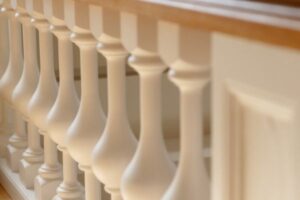
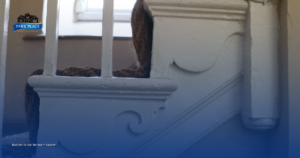
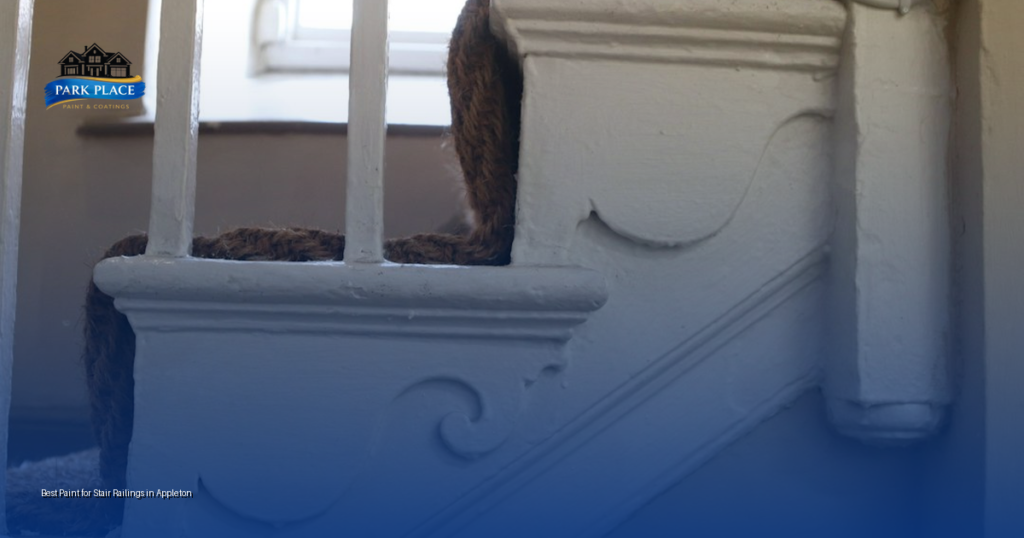
A handrail is one of the most abused surfaces in any house. Every trip up and down the stairs grinds skin oils, hand lotion, and grit into the finish. That is why flat wall paint fails almost immediately here and why a proper interior enamel matters. In older Appleton homes, from the century-old foursquares and Victorians around the City Park and College Avenue historic districts to mid-century ranches on the north side, railings are often original oak or pine coated in decades of varnish and wax. That glossy, contaminated surface is exactly what new paint refuses to grip without real prep. Choosing the best paint for stair railings only pays off if the surface underneath is ready to hold it.
The best paint types for railings and banisters
Waterborne alkyd enamel
Waterborne alkyds give you the rock-hard, self-leveling finish that old oil paints were loved for, but they clean up with water and do not amber over time. That non-yellowing trait matters on white or light-colored balusters, which are the most popular look in Fox Valley homes right now. They level out brush marks beautifully, which is a big deal on spindles you view up close. For many Appleton staircases, this is the best paint for stair railings when you want a smooth, near-sprayed look from a brush.
100% acrylic enamel
A quality 100% acrylic enamel in satin or semi-gloss is more forgiving to apply, dries faster, and stays flexible through seasonal wood movement. In Appleton, where indoor relative humidity can drop into the teens during a January cold snap and climb during muggy July, that flexibility helps the interior enamel film resist cracking as the wood expands and contracts.
What to avoid
Skip traditional oil-based enamels on interior railings unless there is a specific reason: they yellow, off-gas longer, and are increasingly restricted. Never use flat or eggshell wall paint on a handrail. It will burnish and show every hand mark within weeks.
Sheen: satin vs. semi-gloss
For the grip surface of a handrail, semi-gloss is the workhorse. It wipes clean and shrugs off fingerprints. On decorative balusters and newel posts, many Appleton homeowners prefer satin for a slightly softer, more contemporary look. A common approach is semi-gloss on the rail you actually touch and satin on the spindles, though matching both in semi-gloss is simplest to maintain.
Prep and priming: the part that actually determines success
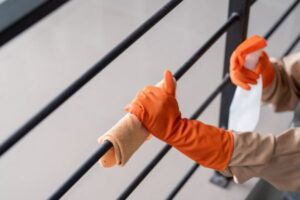
Prep is where most of the work and nearly all of the durability live. On a previously finished railing, the sequence a professional follows is straightforward but non-negotiable:
- Clean: wash the rail with a degreaser to strip hand oils and old wax, then rinse.
- Degloss: scuff-sand the entire surface with 180 to 220 grit so primer has tooth to bite into.
- Repair: fill dents and old fastener holes, then sand flush.
- Prime: use a bonding or stain-blocking primer, especially over glossy varnish or tannin-rich red oak that can bleed through light topcoats.
- Topcoat: two thin enamel coats beat one heavy coat every time, with a light sanding between.
Ventilation and low-VOC product selection matter more in winter here, when windows stay shut against the cold. The U.S. Environmental Protection Agency notes that indoor air can contain higher concentrations of some pollutants than outdoor air, so choosing low-VOC enamels and ventilating during application is worth the effort. For guidance on VOCs and indoor air, see the EPA’s indoor air quality resources.
Timing your project around the Appleton climate
Interior railing work can happen year-round, but the ideal windows are spring and fall, when you can crack a window for airflow without fighting deep-freeze temperatures or peak summer humidity. Waterborne enamels want moderate conditions to cure hard: cold slows the cure and high humidity extends dry time. If you paint in winter, keep the home at a stable comfortable temperature and give each coat extra cure time before heavy use. Even when a coat feels dry, most enamels take days to reach full hardness, so treat a freshly painted handrail gently for the first week. Our team covers seasonal timing in more depth in our guide on ideal temperatures and humidity for painting in Wisconsin, and the same physics apply to interior enamel curing.
A realistic timeline
For a standard staircase, expect the work to span two to three days: a day for cleaning, sanding, repairs, and priming, then coats with proper dry time between. Rushing the recoat window is the single most common reason a DIY railing job feels tacky or peels at the newel post months later.
When to call a pro
Spindles and turned balusters are tedious to coat evenly without drips, and stain-blocking over old oak takes experience to get right. If your railing is a focal point or you want a factory-smooth finish, professional spray or fine-brush application is worth it. You can see examples of our finish work in our project gallery, and if you want the same crew that handles our cabinet and trim refinishing to tackle your staircase, we are happy to take a look. Reach out through our contact page for an estimate in the Appleton area.
This article is general guidance. For questions about lead-safe practices in older homes or specific product safety, consult a licensed professional and follow all manufacturer instructions.